
RAC Certification in Africa: U-3ARC Carries the Continent’s Voice to Chillventa 2026
From 13 to 15 October 2026, the city of Nuremberg, Germany, hosted Chillventa, one of the world's largest trade fairs for refrigeration, air conditioning, and ventilation. On this occasion, Said El Harch, U-3ARC Vice President and Director of Alpha Refrigeration Service, carried Africa's refrigeration voice before an audience of international experts, industrialists, and decision-makers. His topic: certification in the RAC sector in Africa, state of play, challenges, and opportunities. Lassané OUÉDRAOGO
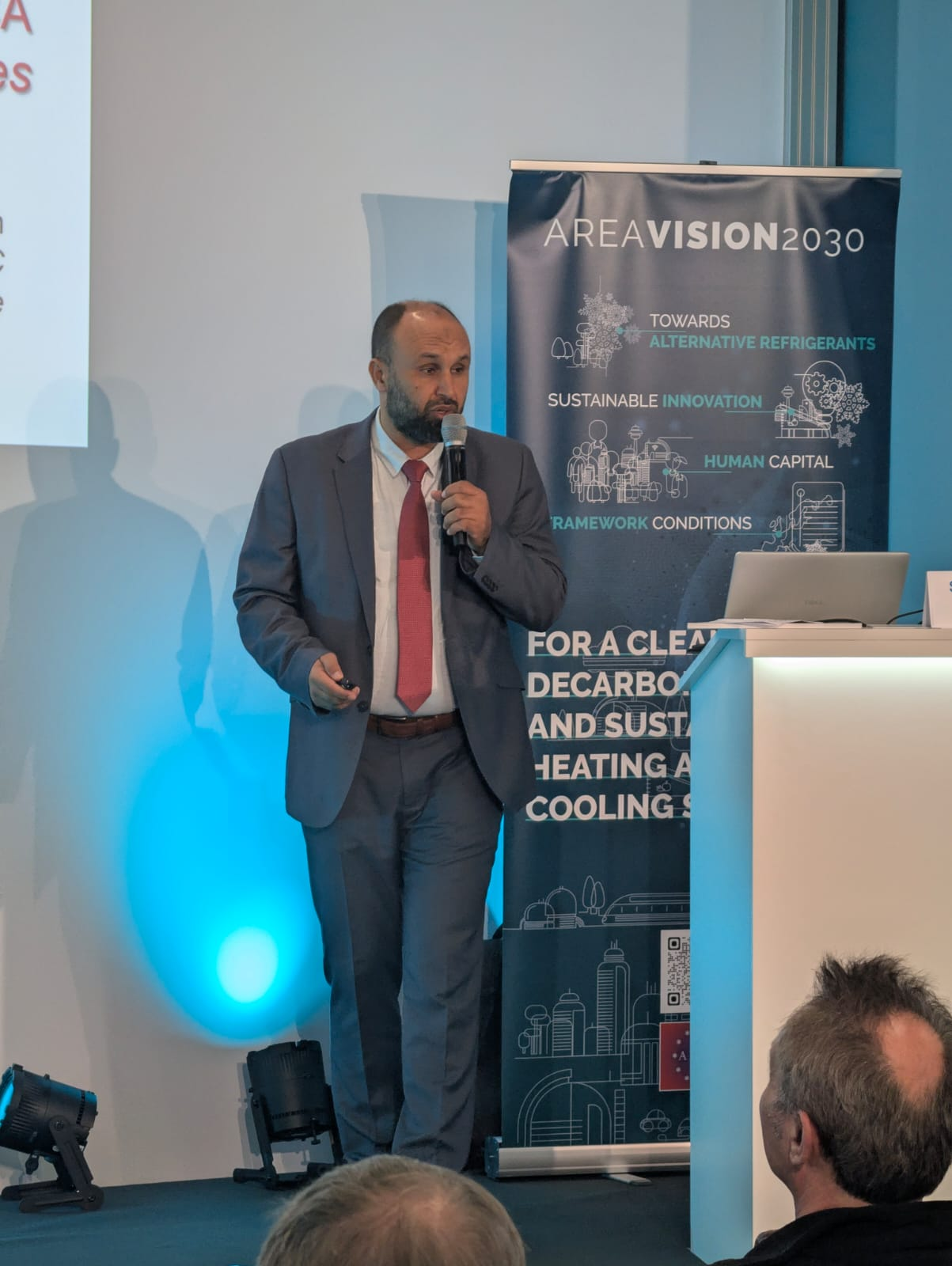
U-3ARC Vice President Said El Harch presented the state of play, challenges, and opportunities of certification in Africa before the global HVAC&R community in Nuremberg.
Why certification is becoming a strategic issue ?
Certification is no longer a simple administrative formality. It has become a strategic issue for three major reasons:
1. The technology transition.
Refrigerants are evolving: R290, R32, CO₂, NH₃. These fluids demand higher safety and service competencies. An untrained technician cannot handle these fluids safely.
2. The market is changing.
Cooling demand is increasing, while equipment becomes more sophisticated. Skills must follow.
3. The workforce is diverse.
Formal TVET graduates and informally trained technicians work side by side. A framework is needed that recognizes real competencies, whatever the path of entry.
As Said El Harch reminded us: "Certification is not only a document. It is a mechanism to demonstrate competence, improve safety, and build market trust."
The state of certification in Africa
Africa does not have one certification system. But systems are emerging:
• Tunisia : certification center in development
• Burkina Faso : certification center in development
• Morocco : certification center in development
• Ghana, Benin, Nigeria, Egypt, Tunisia : national approaches at different stages
The landscape is fragmented: different models, different legal bases, different levels. What is already there: national certification and licensing schemes. What is missing: comparable competency requirements. What is possible: regional recognition based on equivalence.
The objective should not be uniformity. It should be trusted competence.
The main challenges
01 — Fragmentation. Different schemes, certificates, and assessment methods.
02 — Informal workforce. Practical experience is often not formally recognized.
03 — Assessment capacity. Few practical centres, tools, and qualified assessors.
04 — Sustainability. Certification systems need durable financing and governance.
05 — New refrigerants. Flammability, toxicity, and high-pressure systems.
06 — Recognition. Certificates need credibility with authorities and employers.
What an African certification system should measure
Said El Harch proposed a four-level competency framework:
Level 1 : Foundation
Principles • tools • measurements • refrigerant handling
Level 2 : Service
Leak detection • recovery • evacuation • charging • commissioning
Level 3 : Alternatives
R290 / R32 • CO₂ • NH₃ • safety procedures
Level 4 : Advanced
Diagnostics • controls • energy performance • supervision
The shift to be made: from "attending a course" to "demonstrating competence."
From national systems to regional recognition
The proposed path unfolds in 5 steps:
1️⃣ National framework : each country defines its own framework
2️⃣ Common competency reference : a shared foundation at the African level
3️⃣ Quality-assured assessment : qualified centres and assessors
4️⃣ Digital verification : verifiable credentials and technician registries
5️⃣ Regional recognition : mutual recognition between willing countries
U-3ARC: a bridge between Africa and international partners
U-3ARC positions itself as a facilitator:
• Pan-African network : connecting national RAC associations, training actors, and international partners
• Capacity building : supporting training, knowledge exchange, and competency development
• Regional dialogue : helping translate international good practice into African realities
• Africa - Europe - Global HVAC&R community
As Said El Harch emphasized: "U-3ARC can facilitate dialogue and knowledge transfer while national authorities retain responsibility for regulation and certification."
Recommendations: a coordinated strategy for Africa
MAP : Document existing national certification, licensing, and TVET systems.
ALIGN : Develop a common African RAC competency reference.
BUILD : Invest in assessors, practical centres, and train-the-trainer programs.
DIGITISE : Create verifiable digital credentials and technician registries.
RECOGNISE : Pilot mutual recognition between willing countries and regional blocs.
Conclusion
The objective should not be uniformity, it should be trusted competence.
Three major benefits:
• Safety : competent handling of new technologies
• Quality : better installation and maintenance
• Mobility : skills recognized across borders