
MARCO BUONI: A TRUSTED PARTNER IN SHAPING U-3ARC’S PAN-AFRICAN VISION
The history of the Union of African Associations of Refrigeration and Air Conditioning Actors (U-3ARC) is also one of encounters, shared convictions, and partnerships that have helped mature a pan-African ambition. Among the personalities who have supported this dynamic is Marco Buoni, Director General of the Centro Studi Galileo (CSG) and board member in charge of international affairs at AREA (Air Conditioning and Refrigeration European Association). The partnership between Marco Buoni and U-3ARC illustrates a shared ambition: to make training and certification the pillars of a more efficient, safer, and more autonomous African refrigeration sector.
By Lassané OUEDRAOGO, Journalist for U-3ARC
Kigali, Rwanda - October 2026
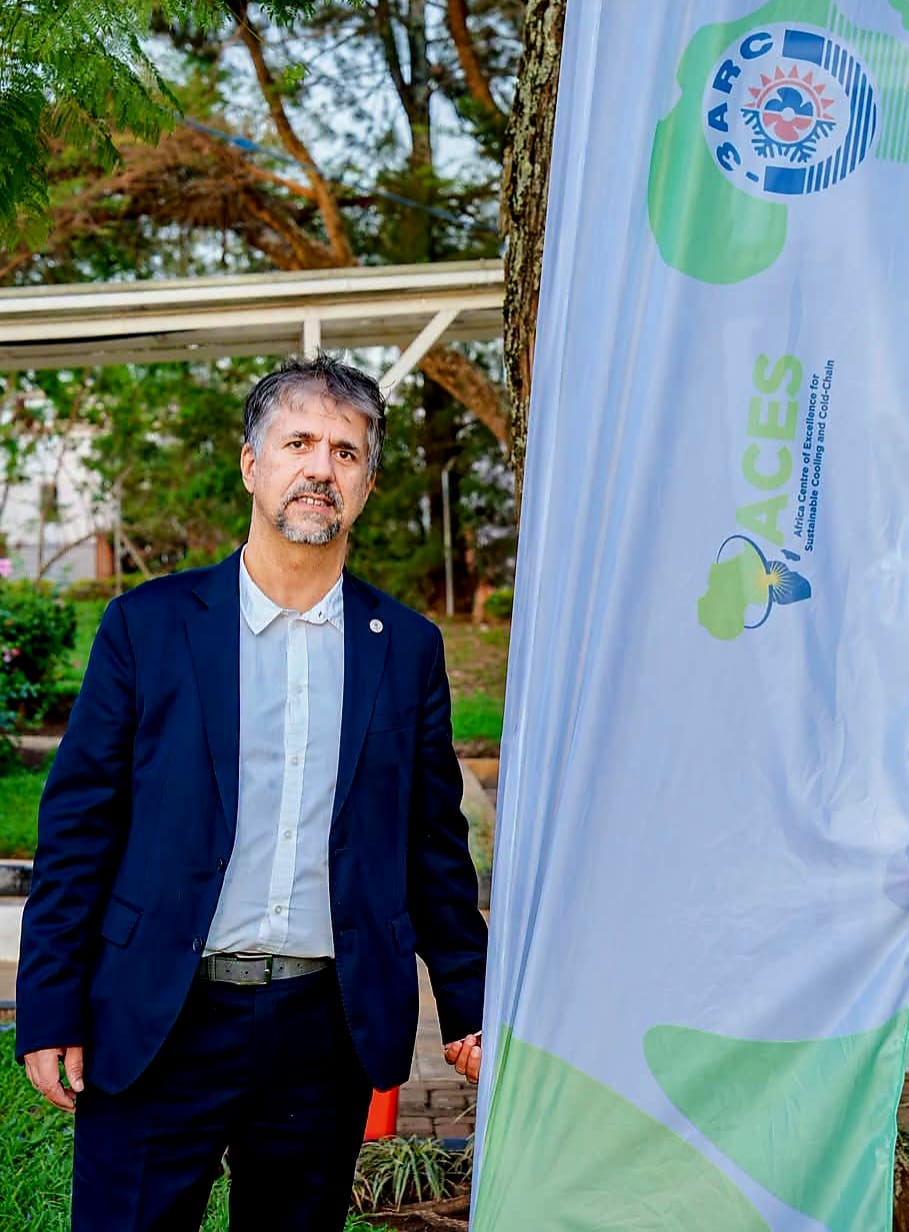
Amidst the intense discussions surrounding MOP38 and following a historic U-3ARC General Assembly, the corridors of the Kigali Convention Centre are alive with conversations about the future of Africa's refrigeration and air-conditioning sector. At the heart of this dynamic is a familiar figure to African stakeholders in the sector: Marco Buoni, Director General of the Centro Studi Galileo (CSG) and board member in charge of international affairs at AREA.
His presence among African refrigeration actors is no coincidence. It is explained in particular by a career marked by long-standing professional relationships and a deep understanding of the evolution of U-3ARC's pan-African project.
To understand this journey, one must first look at his relationship with the President of U-3ARC, Madi Sakandé. It dates back more than twenty years. A friendship and professional proximity built over time, notably because Madi Sakandé lives and works in Italy. Marco Buoni himself speaks of this relationship with great regard: "For us, U-3ARC was never something we discovered from the outside once it had already become successful. We had already had the pleasure of working with President Madi Sakandé for more than twenty years."
But this long personal and professional relationship should not be confused with the beginning of his involvement in the pan-African project.
A relationship of trust serving a pan-African ambition
When Madi Sakandé and other fellow technicians began to carry the ambition of creating an organization capable of uniting refrigeration actors across the African continent, Marco Buoni took part in this dynamic. As President of AREA at the time, he knew the project and contributed to its maturation, particularly through exchanges and reflections on structuring a pan-African organization. This contribution is part of a broader history: that of international cooperation based on trust, the sharing of expertise, and the conviction that African refrigeration professionals must have the same opportunities for training, qualification, and professional recognition as their counterparts in the rest of the world.
Training is also a determining element of this dynamic. Madi Sakandé, Saïd El Harch, Raoudha Massaoudi, and several other African experts have progressively helped to bring forth a community of recognized trainers and professionals. Marco Buoni particularly highlights the quality of the skills and commitment of these actors: "We value them most highly. Over the years, we have been able to see directly their technical competence, their commitment, and the vision that were driving this initiative forward."
Among the milestones in the organization's development, he points to the progressive joining of the last African countries to the project. This evolution helped consolidate a true pan-African network. U-3ARC then moved beyond the stage of a promising initiative to become a continental dynamic.
Africa does not need to prove its ability to achieve excellence
In the field of professional certification, Africa has long been considered a space that still had to demonstrate its capacity to meet international standards. Marco Buoni defends a different approach. Asked how the Centro Studi Galileo convinced its international partners of the ability of African professionals to access high-level certifications, his answer is unequivocal: "We did not have to convince them through theory: the evidence came from the people and institutions we were working with."
His conviction is clear: the level of requirement for a certification should never depend on geographical location. When the same equipment, the same refrigerants, and the same safety risks are present in Africa as elsewhere, African technicians must benefit from the same level of skills assessment and professional recognition.
One requirement remains essential, however: adapting implementation methods to local realities, without ever lowering technical standards.
The challenge is therefore not to offer a cut-rate certification, but to guarantee African professionals equitable access to recognized assessment and qualification systems.
The technician of tomorrow will be a true "Swiss Army knife"
The transformation of the refrigeration sector is not limited to replacing refrigerants. It implies a profound evolution of skills and professional practices. For Marco Buoni, the transition to low Global Warming Potential (GWP) alternatives imposes new requirements in terms of safety and technical mastery.
"Hydrocarbons introduce flammability risks; ammonia requires very specific safety procedures; and A2L refrigerants also demand new knowledge and professional practices."
Added to this evolution is another major transformation: the digitalization of refrigeration and air conditioning equipment and systems.
"Modern systems are becoming increasingly connected, digital, and intelligent. Electronics, sensors, variable-speed technologies, advanced controls, remote monitoring, data analysis, and predictive maintenance will progressively become part of professionals' daily work."
He also draws attention to an emerging issue: cybersecurity, which is becoming a real technical question in connected installations.
The technician of tomorrow will thus need to combine mastery of thermodynamics, practical skills, knowledge of electronic and digital systems, a culture of safety, communication, and the ability to integrate technologies. In this context, continuous training will no longer be a simple option. It will become an essential component of practicing the profession.
The major challenge : sustaining certification beyond funding
For Marco Buoni, the question of sustainability constitutes one of the most strategic challenges in skills development in Africa. Project funding is essential to create training centers, prepare trainers, and acquire the necessary equipment. But their intervention is not enough to guarantee the continuity of the systems. "Long-term sustainability requires local ownership. National associations, training institutions, governments, and industry actors must be able to maintain the system once the project is completed."
Building a true pan-African certification system therefore requires a common architecture: shared competence frameworks, theoretical and practical assessments, qualified assessors, and quality control procedures. This harmonization must, however, retain the necessary flexibility to account for national legislation and the realities of each market. From this perspective, U-3ARC has a strategic role: bringing national associations closer together, facilitating cooperation between actors, and contributing to better recognition of professional skills from one country to another.
The objective is to build a coherent, credible, and sustainable system, capable of moving beyond the limits of one-off funding and becoming part of national vocational training policies.
The quality of the cold chain also depends on human skills
Beyond technical considerations, Marco Buoni reminds us that training and certification have direct consequences on the economy, society, and the environment. "The quality of the cold chain and air conditioning systems ultimately depends on the competence of the technicians who install, maintain, and repair them."
A reliable cold chain helps protect food, reduce post-harvest losses, and support local markets. It also contributes to the preservation of sensitive products and the reliability of preservation infrastructures. When technicians are properly trained, the benefits go far beyond the corporate framework: communities, consumers, and the environment also benefit. To guarantee the viability of the system, several conditions must be met: accessible certification costs, active participation from the industry, and lasting institutional support. But one condition remains fundamental: certified skills must be recognized as a true professional requirement in the labor market. The challenge is therefore not simply to multiply training courses, but to make certification a natural and recognized step in the career path of African technicians.
A partnership building a continental legacy
From Tunis (Tunisia) to Ouagadougou (Burkina Faso), via Milan (Italy) and Kigali (Rwanda), the Centro Studi Galileo and U-3ARC have progressively developed a cooperation that goes beyond a simple institutional exchange. This collaboration contributes to a shared ambition: laying the foundations for a continental reference framework for training and certification in the refrigeration and air conditioning sector.
Marco Buoni's vision comes down to one conviction: it is not simply about creating more training courses, but about building a permanent structure in which training, assessment, certification, and continuous learning become normal components of the professional career of refrigeration and air conditioning technicians in Africa.
His journey alongside Madi Sakandé testifies to the importance of relationships of trust in the maturation of major initiatives. From friendship to institutional cooperation, this story illustrates how shared convictions can help bring forth a collective ambition.
At a time when Africa intends to fully take its climate future into its own hands, the development of U-3ARC reminds us that the transformation of the refrigeration sector also relies on the quality of skills, the recognition of professionals, and the capacity of institutions to build sustainable systems.
Because building the future of African refrigeration also means investing in those who master its technologies, says Marco Buoni.