
Civufa 2025 - First attempt, a masterstroke
International Conference on the Promotion of Refrigeration in Africa (CIVUFA) concluded on the evening of November 12, 2025, in Ouagadougou, Burkina Faso. RAC sector, present in numerous economic sectors and at the heart of international trade, now deserves greater understanding and consideration from policymakers. Important recommendations were issued at the conference.
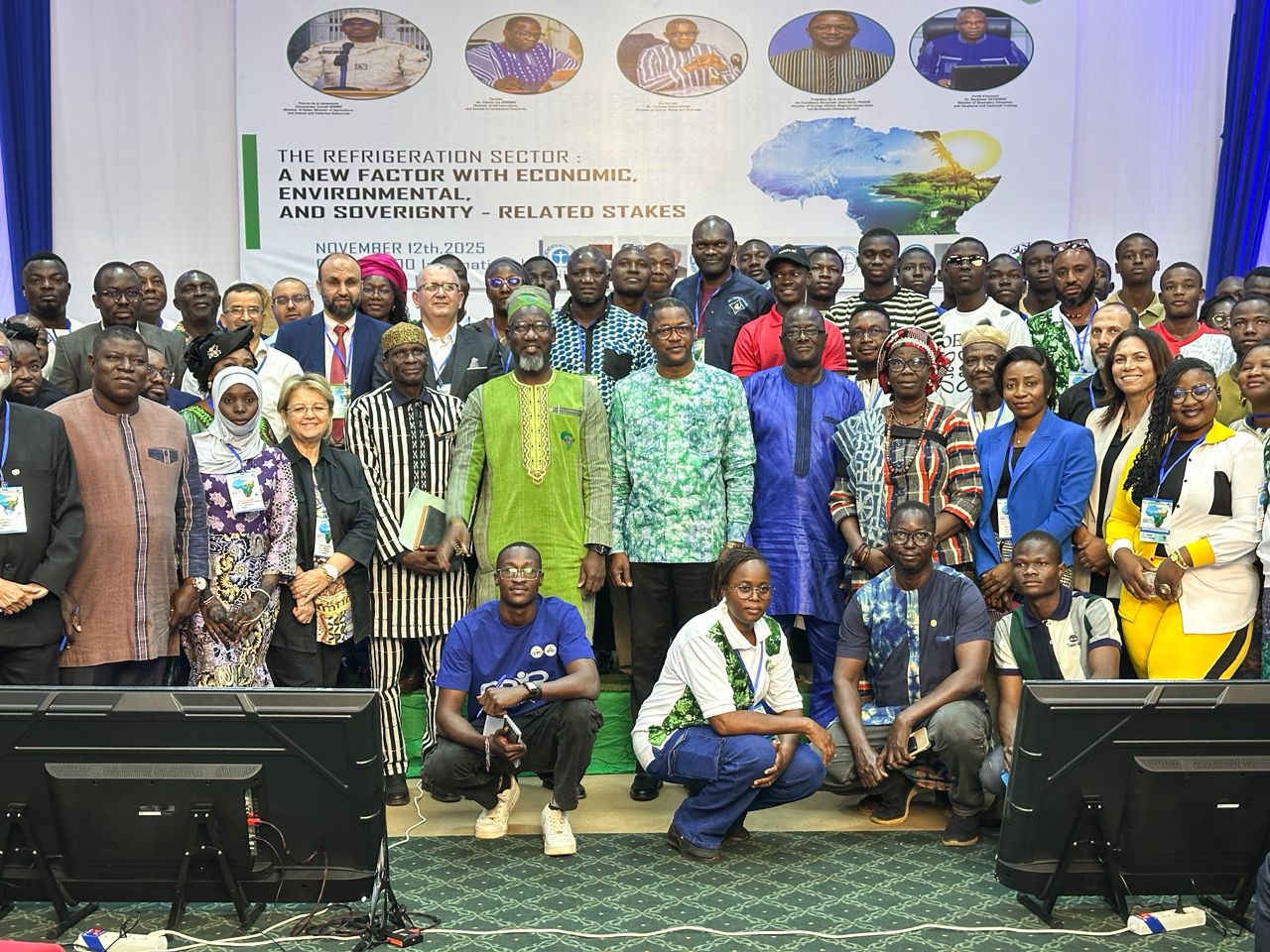
Following the first and landmark International Conference on the Promotion of Refrigeration in Africa (CIVUFA) in Ouagadougou, the cross-cutting nature of the refrigeration sector throughout the economic fabric is now widely acknowledged. The various presentations at the opening session and during the different panels all converged on this reality: a sector with very high added value and a strong driver of development. It is with this in mind that the Union of African Associations of Refrigeration and Air Conditioning Stakeholders (U-3ARC), in collaboration with its partners, organized the first CIVUFA (African Conference on Refrigeration and Air Conditioning) on November 12, 2025, at the Ouaga 2000 International Conference Center. This edition, themed "The Refrigeration Sector: A New Factor Facing Economic, Environmental, and Freedom Challenges for Peoples," aimed to propose a continental action plan for the effective management of refrigeration within sustainable development policies and initiatives in Africa.
For example, in the agricultural sector, an efficient cold chain extends the shelf life of agricultural products between harvest and consumption. It also brings production and consumption sites closer together, thus making production chains economically viable.
In the health sector, refrigeration also has a direct impact thanks to the proper preservation of food and pharmaceutical products. New therapeutic techniques using low temperatures further amplify this impact. Air conditioning ensures thermal comfort and/or the conditions necessary for the smooth operation of certain processes. The innovations introduced by the Kigali Amendment deserve to be known and implemented in various countries. The energy-intensive cooling and heating sector, closely linked to energy challenges, represents approximately 20% of global electricity consumption, according to IIR.
A promising sector
In Africa, mastery of the refrigeration and air conditioning (CFC) sector is a major asset for sustainable development, due to its cross-cutting and inclusive nature, its potential to create thousands of jobs, and its essential contribution to food sovereignty.
Approximately 300 participants from 23 African countries and around the world, as well as several international organizations (FAO, UNEP, UNIDO, International Institute of Refrigeration – IIR, Galileo Center for Studies – Italy) and the Burkina Faso public administration (Ministry of Agriculture and other ministerial departments, National Ozone Office, ANEREE, Special Delegation of the Municipality of Ouagadougou) took part.
Key Recommendations
For Governments and the Public Sector:
1. Ensure the effective promotion of refrigeration through its institutionalization.
2. Establish national agencies responsible for promoting refrigeration and national focal points for refrigeration.
3. Monitor the design and implementation of national and/or regional action plans for refrigeration using an inclusive approach.
4. Initiate discussions on reducing or eliminating import duties and taxes on refrigeration equipment.
5. Promote public-private partnerships in the refrigeration sector.
6. Encourage appropriate and locally developed technologies in the refrigeration sector.
7. Promote technology and skills transfer in the refrigeration sector.
8. Promote energy efficiency, particularly through financial incentives and the adoption of minimum energy performance standards (MEPS).
9. Promote the use of renewable energy in the refrigeration sector.
10. Strengthen access to public procurement for refrigeration professionals.
11. Strengthen the participation of national associations of refrigeration professionals and stakeholders in national initiatives and programs. Refrigeration sector or related fields
12. Promote training programs, including certification and support for young people to enter the workforce and start businesses in the refrigeration sector.
13. Implement demonstration projects and encourage the development of refrigeration platforms.
14. Encourage refrigeration projects that support food sovereignty and security initiatives.
15. Ensure the establishment of a system for monitoring, evaluating, and measuring the impact of projects funded by the countries' technical and financial partners.
To the attention of technical and financial partners:
1. Support public and private initiatives aimed at promoting refrigeration.
2. Support the financing of refrigeration platforms.
3. Promote the sharing of experiences between different countries.
To the attention of U-3ARC and national associations:
1. Continue advocacy work for the institutionalization of refrigeration.
2. Continue raising awareness among various stakeholders about the importance of refrigeration.
3. Continue developing and disseminating national directories of refrigeration service providers.
4. Strengthen continuing education for refrigeration technicians in collaboration with various stakeholders.
5. Develop a white paper on successful and unsuccessful refrigeration initiatives in Africa, in collaboration with all stakeholders.