
Cameroon Lays the Foundations of the World’s First National Refrigeration Order
On 24 September 2026, in Yaoundé, the 4th African Refrigeration Day marked a historic turning point. Under the high patronage of the Prime Minister, Head of Government, Mr. Joseph Dion Ngute, and around the theme "Refrigeration speaks to humanity," sector stakeholders laid the foundations for an unprecedented institutional transformation: the conversion of the Association of Refrigeration and Air-Conditioning Professionals of Cameroon (APFCC) into a National Order of Refrigeration and Air-Conditioning Professionals. A world first. A model for Africa. In this exclusive interview granted to U-3ARC, the Secretary General of APFCC and Deputy Secretary General of U-3ARC, Mr. Alain Tchoua Ndjeudji, looks back at the challenges, perspectives, and issues of this historic transformation. He offers a straightforward analysis, rooted in years of fieldwork, and one conviction: African refrigeration must structure itself, certify itself, and carry weight.
By Lassané OUÉDRAOGO
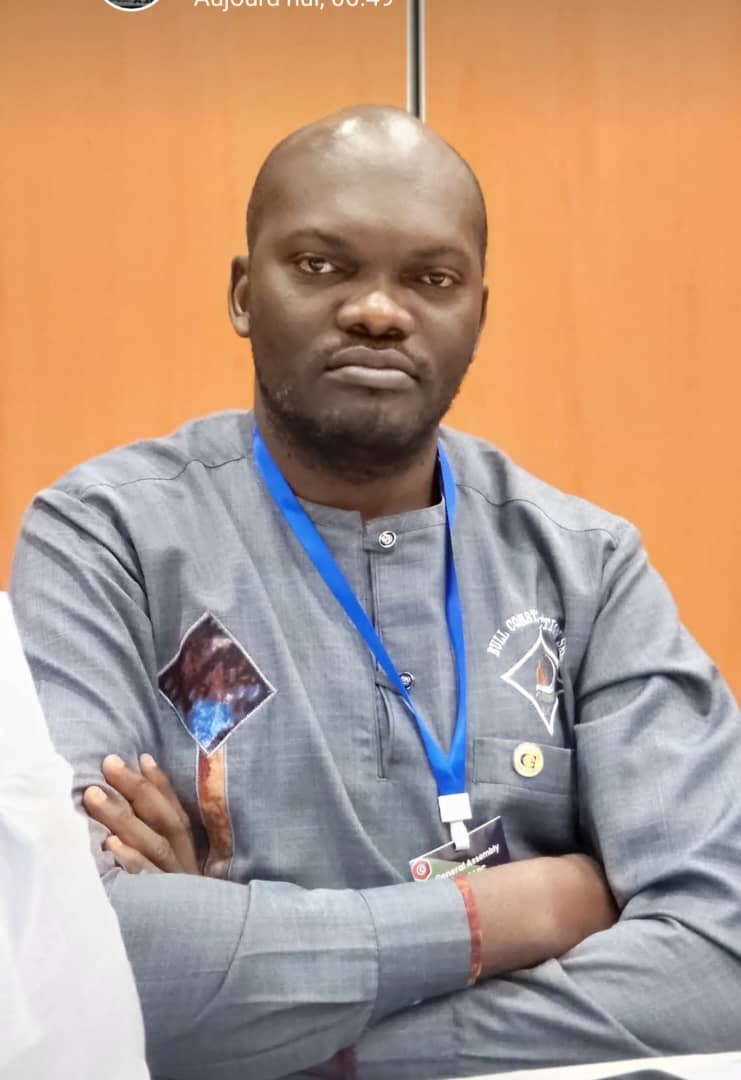
1. APFCC is moving from association status to national Order status. Concretely, what changes for the basic refrigeration technician in Douala or Garoua? Will he have more protection, more recognition, more income or is this first and foremost a change of nameplate on the door?
Alain Tchoua Ndjeudji: No, this is not just a change of nameplate. Things are changing deeply, on several levels.
First, we must understand the difference in nature between the two structures. The association is based on voluntary membership. The Order is mandatory. That changes everything. Concretely, the Order will classify and categorize professions. We will no longer be simply "refrigeration technician" or "air-conditioning technician" in a blur. We will distinguish surface technicians, senior technicians, engineers, experts. Everyone will know where they stand — and so will the client.
Then, the Order will bring more rigor and more dynamism to the profession. Training becomes mandatory. Retraining and upgrading too. Safety rules and good practices will no longer be optional: they will be required.
Another major change: the regulation of public contracts. Until now, refrigeration contracts were often awarded to electromechanics, renewable energy specialists, or thermal engineers, for lack of a clear framework. From now on, these contracts will go to refrigeration professionals, because the Order will be there to define the conditions.
The Order will also have a regulatory power that the association did not have. It will be able to intervene in supermarket conservation, cold room design, and the cold chain as a whole. It will be able to strike off a professional who does not respect safety rules or good practices. The association only had a proposing role. The Order participates in drafting the standards specific to the sector in Cameroon.
Finally, the Order will have a legal framework that protects both the professional and the client. This is no longer just awareness-raising or free meetings. It is a dissuasive, rigorous, binding framework. And this applies to all ten regions of Cameroon. The Order will allow each professional, in each region, to find local solutions adapted to their local economy.
So yes: the basic refrigeration technician in Douala or Garoua will have more recognition, more protection, and eventually more income, because their profession will finally be framed, categorized, and respected. This is not a nameplate on a door. This is regained dignity.
2. You speak of eliminating illegal practice of the profession. Today, in Cameroon, how many technicians work without certification? And concretely, how does a national Order intend to control, sanction, and support these thousands of informal workers who keep the market running?
ATN: Refrigeration as a whole especially domestic refrigeration occupies a huge place in Cameroon. But it is largely practiced by technicians who learned on the job. Surface technicians, without certified training, without a framework, without standards.
With the Order, these technicians will not be pushed aside. They will not be struck off overnight. They will be called to come and strengthen their skills. The goal is that from now on, we have professionals whose competence has been consolidated, whose categorization has been clearly defined, and whose level of expertise and practice is precisely established.
But there are not only local technicians. There are also foreigners selling illegal equipment on the Cameroonian market. Teams installing non-compliant devices, respecting neither international conventions nor the agreements Cameroon has signed whether under the Kigali Agreement or the Montreal Protocol.
The Order comes precisely to fill this void. It will make it possible not only to frame technicians, but also to regulate traders and resellers, so that they comply with the standards and agreements the country has signed. The Order is an instrument of global market regulation.
3. The President of APFCC reminded us that refrigerant management is an absolute ecological imperative. Cameroon stopped importing R22 in 2023, but significant quantities of this refrigerant remain on the market, along with second-hand equipment. How can a national Order handle this reality, when the informal market demands them for cost reasons?
ATN: First, we must correct one thing: Cameroon no longer imports R22. The R22 still found on the market entered before the agreements expired. Since 2023, Cameroon has stopped importing this refrigerant. That is an important point.
That does not solve everything. The R22 already inside the country will die alone inside. It must be recovered, treated, and properly disposed of. Otherwise, it will eventually escape into the atmosphere.
Today, Cameroon is in transition. It is moving to R410A and R32, and gradually shifting toward natural refrigerants: R290 and R600a. That is the ongoing evolution. But, as the national President of APFCC stressed, refrigerant management poses a real problem. Why? Because not all professionals have recovery kits. The Ozone Bureau, through the Ministry of Environment, has made kits available to a few refrigeration professionals in Cameroon. But it is not enough.
Our advocacy is that all ten regions of Cameroon be equipped with these kits. That departments be equipped too. That technicians in remote areas have what they need to recover refrigerants instead of letting them escape. Because a refrigerant that escapes attacks the ozone layer and warms the planet.
This is a dense challenge. The Order intends to rise to it. It has the duty and obligation to act so that, within the next five to ten years, we have a cleaned-up Cameroonian market and well-trained professionals, aware of the ecological and safety stakes linked to refrigerant handling.
And that is not all. We are also working with the Ministry of Finance to reduce customs costs on refrigeration and air-conditioning products. The goal is simple: to allow Cameroonian households to access new equipment, rather than turning to second-hand markets and the black market for lack of means. New equipment is safer, more efficient, and more environmentally friendly.
4. You have trained more than 1,600 young technicians in clean technologies. But is the Cameroonian market ready to absorb them? Are there real opportunities, partnerships with companies, mining, agribusiness, health? Or are we risking training young people for unemployment?
ATN: We have already strengthened the skills of more than 1,500 young people through training, and we have modified curricula in Cameroonian universities, notably the University Institute of Technology in Douala. In the next five years, we plan to train between 3,000 and 5,000 young professionals, capable of responding to the local challenges of the Cameroonian market.
For those already graduated, we plan to strengthen their skills in the proper execution of tasks and missions entrusted to them. And among them, we will identify those qualified to conduct research, enabling them to find local solutions adapted to each region.
We have entered the academy. We continue to train. We will define themes specific to each region, so that refrigeration now responds to the real problems of Cameroon, and no longer to the logic of obtaining a diploma just to exist, without knowing what comes next.
Moreover, I want to recall a historic first: for the first time in Cameroon, there is a bachelor's degree in refrigeration engineering, at the Douala Institute. There is also an engineering cycle Master 2. The future engineers who graduate will be completely different from those of yesterday. They will have more focus on refrigeration, on cooling, and why not on heat pumps.
So, opportunities? They are there. Professionals just need to seize them. A few concrete examples: fish conservation, meat conservation, agricultural produce conservation, vaccine conservation. Even transport is concerned: we sometimes travel in air-conditioned buses that lack proper air renewal. Yet air conditioning a building is not the same as oxygenating it. Professionals must also think about renewing air to guarantee user comfort and health.
We are convinced of one thing: young people will not be unemployed. They will have work, for themselves, and will become entrepreneurs capable of creating more jobs in Cameroon.
5. Cameroon is about to become the first country in the world to establish a national refrigeration Order. Is this a model exportable to the rest of Africa? And concretely, what role can U-3ARC play in supporting other countries like Burkina Faso, Mali, the DRC, Senegal toward this same institutional transformation?
ATN: Cameroon has migrated its texts, from association to Order. And it has been recognized as the world's very first professional Order in refrigeration. It is immense satisfaction. It is even a great joy to see that a vision carried from Africa can be exploitable and exportable internationally.
Yes, U-3ARC can draw inspiration from this model. As soon as the new first bureau of the Cameroonian Order is set up — by December — our texts can be exported by U-3ARC to drive the same dynamic in all African countries.
And why stop there? The ambition is for U-3ARC to no longer be just an association, but to become an Order. That would give it more weight, more awareness-raising capacity, and a much stronger voice at the pan-African level. It would also allow refrigeration, globally, to be recognized as a true professional Order, with more rigor and authority.
One thing must be understood: in the African model, associations carry little weight. They are non-profit, non-taxable, and often only have a proposing role. The Order works differently. It can be for-profit, generate its own income, and is subject to taxation. It imposes itself not only on the government, but first and foremost on the profession itself, and on all those who practice or consume the sector's services.
That is the whole difference: the Order has more action, more determination, more rigor. And that is exactly what our profession needs.
We therefore want this model to be exportable throughout Africa. And why not, to the entire world.
6. A national Order needs resources: headquarters, staff, national registry, inspections, continuing education. Where will the funding come from? Member contributions? State subsidies? Private partnerships? And how will you guarantee the Order's independence from political or commercial pressure?
ATN: We are counting first on member contributions. Membership is inseparable from the functioning of the Order. That is the foundation.
Then, for major events, we can count on private partners to sponsor. But this is a delicate point, and we know it. We do not want private interests to compromise the Order's mission. That is why we prefer professionals to limit themselves to regulatory contributions, and private partners to provide only occasional, supervised support.
We also count on the State. The Cameroonian State has always opened its doors to us, and we work in collaboration with it. We hope it can provide us with buildings in the ten regions, so that the Order can sit, have regional branches, and steer its actions from a national headquarters in Douala. State subsidies will be necessary, because regulatory work — investigations, inspections, organization — requires real financial means.
Finally, we count on international donors. Not to fund professionals themselves, but to support structuring activities: training caravans, mapping the profession, an exact census of professionals, a telephone directory of professionals in the ten regions. These are indispensable tools, and they need funding.
Our line is clear: professionals contribute according to the rules; the State and donors support activities of general interest. This is how we will guarantee the Order's independence and neutrality.
7. A professional Order works hand in hand with the State, but keeps its autonomy. How does APFCC intend to articulate its relationship with the Ministry of Environment, Energy, Health, and Mines? Do you already have signed agreements, or is it still at the discussion stage?
ATN: We will always work hand in hand with all ministries, because each ministry is a supervisory authority depending on how the profession is practiced.
A refrigeration professional can work in health, environment, education, higher education, transport, or mining. Each ministry therefore has a part to play. That is why the National Order of Refrigeration and Air-Conditioning Professionals must be attached either to the Presidency or to the Prime Ministership. Because it is cross-cutting.
Agreements will be developed with each ministry. The goal is not only to inform them, but to clearly define the interactions and areas of intervention of each in the overall functioning of the Order in Cameroon. This work is ongoing.
8. Refrigeration is a historically male sector. Of the 1,600 young people you trained, how many are women? And what concrete measures does the Order intend to take to feminize the profession and attract young girls to technical refrigeration careers?
ATN: The technical profession in general, and refrigeration in particular, is historically male. But in Cameroon, we have several women working in refrigeration. We even have a National Secretary in charge of women's mobilization actively working on this issue.
Today, we have mobilized at least 50 women in Cameroon. And about 5 women participated in the Dr Charity competition launched by U-3ARC. Next year, we expect at least 20 women to take part.
It must be understood that women are often confronted with their education, the gaze of society, and the gaze of family. They sometimes end up losing sight of their own competence. We are therefore in a zone of awareness-raising and guidance, so that women understand that beyond their education and their household, they can be part of the country's development, through their intrinsic capacity.
We sometimes forget that women are better organized than men. We are working on mentoring for women, so that they are now seen, recognized, and love this profession even more.
9. You want to ban the import of obsolete second-hand equipment. But this equipment is often cheaper, therefore attractive to households and small businesses. How do you reconcile environmental requirements with the economic reality of Cameroonian purchasing power? Do you plan subsidies, payment facilities, or local alternatives?
ATN: Yes, second-hand equipment enters African borders. It is sometimes second-hand goods, scrap, obsolete equipment from the European Union or the United States. We want to ban it. But this ban will not happen before we have obtained the agreement of the Ministry of Finance and Customs on reducing taxes on refrigeration products.
As soon as we have that agreement, we can ban it. Because we will then know that new equipment and adapted technology can enter Cameroon without excessive customs costs. At that point, the price will be within everyone's reach, and the ban will be fair.
Already today, R22 equipment is banned from entering Cameroon. What enters are R600a equipment, a natural gas, or R410A, which is a transitional gas. But we are working with the Ministry of Finance and the Cameroonian government so that this changes, and the environment is protected.
Cameroon values environmental preservation. The Ministry of Environment regularly organizes training for refrigeration and air-conditioning professionals, so they understand and put the environment at the heart of their strategies. The Order will strengthen this dynamic, weighing in with its full authority so that the refrigeration profession is not only rewarding, but also compliant with the Kigali Agreements and the Montreal Protocol, the two texts on which the Ministry of Environment relies to act.
10. In ten years, what will Cameroonian refrigeration look like if the Order succeeds in its mission? What will be the concrete indicators of success: number of certified technicians, reduction of refrigerant leaks, lower energy consumption, reduced mortality linked to poorly stored vaccines? And what message do you want to send to African youth who still hesitate to embrace this profession?
ATN: In ten years, we believe the Order will have reached all ten regions of Cameroon. We also believe there will be an African platform — Central Africa, West Africa, East Africa, North Africa, on which Africans will work first regionally, then pan-Africanly, to allow the continent to move forward.
We are convinced that the number of certified technicians will increase. The reduction of non-natural refrigerants will be progressive, until their elimination. The reduction in energy consumption will be more pronounced, because we have discussed with the Ministry of Water and Energy the possibility of introducing and validating minimum standards that will allow Cameroonians to consume less energy, especially in refrigeration.
We also encourage Cameroonians to take an interest in technology, because this sector consumes a lot of energy if poorly designed.
In the health system, refrigeration for all will allow, with the methodology we are putting in place and the education we are conducting inside the country, Cameroonians to now take an interest in the cold chain according to their field. So that, in the next ten years, we are capable of conserving meat, transporting it efficiently, and guaranteeing the cold chain as a whole.
The message to African youth? This profession is a profession of the future. It is not just about repairing fridges. It is about building the food, health, and digital sovereignty of our continent. Those who still hesitate must understand that they have a place to take, and that they will be the architects of this revolution.
Interview conducted by Lassané Ouédraogo. For U-3ARC.